Biomanufacturing Explained
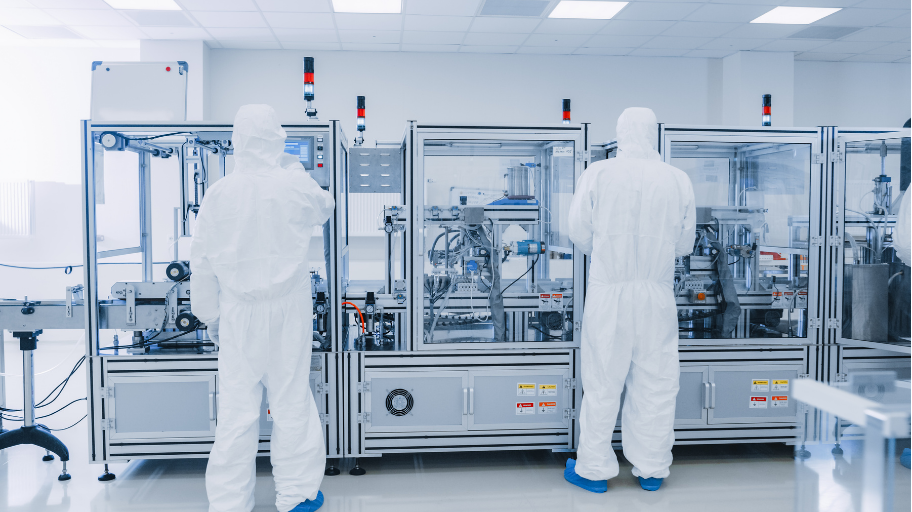
Biomanufacturing is how we turn living cells into lifesaving drugs. How? With genetically engineered cells acting as microscopic production factories. Think insulin. Think monoclonal antibodies. Think gene therapies. All are made using living systems.
Over the next few weeks, The Primer will explore the process of manufacturing biologics in more detail. Today we will start with an overview. Let’s get started.
Step 1: Cell Line Development
Everything starts with a cell.
Most biologics are produced using CHO (Chinese Hamster Ovary) cells because they grow efficiently and produce proteins that can be used as therapies. Scientists insert the gene encoding the desired therapeutic protein into the cell’s DNA.
The objective: Create a stable, high-producing cell line that consistently generates large quantities of the protein that will act as the drug.
It begins with one selected cell known as a clone. The clone becomes the Master Cell Bank (MCB), starting material that can be used for years. In biologics manufacturing, the cell is the factory. If the cell changes, the product changes.
Step 2: Upstream Processing (Growing the Cells)
Upstream processing focuses on growing cells.
- Cells are thawed from the Master Cell Bank.
- They are expanded in progressively larger vessels (often called the “seed train”).
- They are transferred into a large production-scale bioreactor.
Inside the bioreactor, cells are supplied with nutrients such as sugars, amino acids, vitamins, and salts while temperature, pH, dissolved oxygen, and agitation are tightly controlled. Over several days, the cells grow and secrete the therapeutic protein into the surrounding liquid.
At this point, the culture contains:
- The desired protein
- Host cell proteins
- Residual DNA
- Media components
- Cellular debris
Which brings us to purification.

Step 3: Downstream Processing (Purification)
Downstream processing isolates and purifies the therapeutic protein from everything else. This phase is technically complex and often represents a significant portion of total manufacturing cost. Purity is not optional. It is required by regulators. At the end of downstream processing, you purified the drug substance.
Step 4: Formulation and Fill-Finish
Once the protein is purified, it’s not ready for patients just yet. It’s carefully formulated with stabilizers and buffers to protect its structure, maintain potency, and extend shelf life.
Then comes fill-finish—sterile filling into vials, syringes, or cartridges, followed by labeling and packaging. Every step happens under tightly controlled aseptic conditions, because one microscopic contaminant can shut down an entire batch or worse harm a patient.
Step 5: Quality and cGMP
Biomanufacturing operates under current Good Manufacturing Practice (cGMP) regulations. Each batch undergoes rigorous testing for:
- Identity
- Purity
- Potency
- Safety
Extensive documentation ensures traceability and reproducibility. Any deviation from standard procedures must be investigated and resolved. In biologics manufacturing, the process defines the product.
The Bottom Line
Biomanufacturing is biology under control. Living cells produce the medicine. Engineers control the environment. Quality systems ensure consistency. Regulators oversee compliance. The result is a class of therapies—proteins, antibodies, and gene-based medicines—that transformed modern healthcare.
Level Up
Understand the manufacturing process and you unlock everything else. The science. The regulatory strategy. The cost drivers. The risk. The valuation. In biologics, manufacturing isn’t a back-end function. It is the business model.
If you want to speak fluently about CMC, scale-up, tech transfer, cGMP risk, and why investors obsess over manufacturing readiness, it’s time to level up. Register for Biotech Primer’s Drug Manufacturing Executive Certification and turn process knowledge into career leverage.

Biotech Primer is your go-to source for interactive training across the biotechnology, pharmaceutical, molecular diagnostics, and medical device sectors. Explore a range of in-depth biotech courses designed to deepen your understanding of key principles and applications in the field.
Learn More